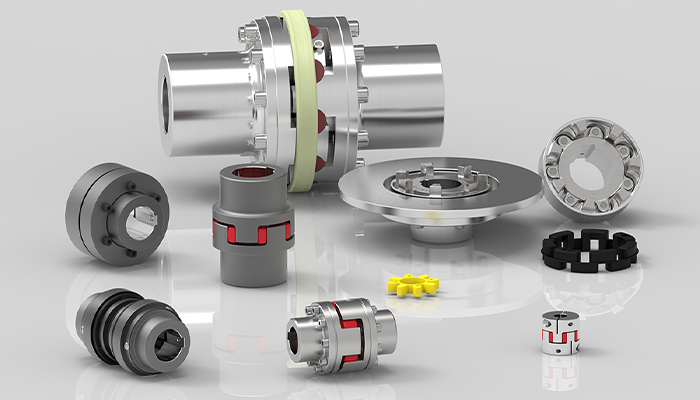
When discussing drive systems, most people typically think first of motors, gearboxes, or bearings. In contrast, the coupling is often only considered at the end of the selection process. It not only connects two shafts but also has a significant impact on the reliability, precision, and service life of the entire drive system.
If a coupling fails or is incorrectly specified, the consequences are often more far-reaching than expected: increased wear, excessive vibrations, unplanned downtime, and high maintenances costs, potentially leading to equipment breakdown.
The reality is simple: not all couplings are created equal, and not every coupling is suitable for every application.
Different applications require different coupling solutions
While the primary function of every coupling is to transmit torque, application requirements can vary considerably.
Some applications demand vibration damping and misalignment compensation, whereas others prioritize torsional stiffness, high torque capacity, or maximum positioning accuracy. Furthermore, operating conditions such as shock loads, continuous operation, and environmental influences must also be considered.
Therefore, selecting the appropriate coupling technology is crucial for achieving optimal performance, reliability, and service life across the entire drive system.
What does a coupling actually do?
At its core, every coupling is designed to transmit torque between a driving shaft and a driven shaft. In modern drive systems, however, a coupling performs far more than this basic function:
- Transmission of torque, power and high rotational speed
- Compensation for radial, axial, and angular shaft misalignment
- Reduction of vibration and shock loads
- Protection of critical machine components
- Improvement of system availability
- Support of precise motion control
Furthermore, the importance of these functions varies significantly depending on the application. Consequently, selecting the appropriate coupling technology is an essential step in the design of any drive system.
Why the wrong coupling can be costly
When equipment problems occur, bearings, gearboxes, or motors are often the first components to be investigated. However, the root cause frequently lies in an unsuitable coupling.
Typical consequences of selecting the wrong coupling include:
- Excessive bearing loads
- Increased vibration levels
- Heat generation
- Premature wear
- Higher energy consumption
- Unplanned downtime
These Challenges become particularly critical in applications involving continuous operation, frequent load changes, or highly precise motion requirements.
Modern couplings must do more
While torque transmission was once the primary consideration, modern couplings are now expected to meet a much broader range of requirements.
These include:
- Increased energy efficiency
- Reduced maintenance requirements
- Improved system availability
- Protection against overload conditions
- More compact designs
- Enhanced dynamic performance in automated processes
Additionally, operators increasingly expect lower downtime costs, greater reliability, and simplified maintenance procedures throughout the equipment lifecycle.
As a result, coupling selection has become an important factor in achieving both operational efficiency and long-term cost effectiveness.
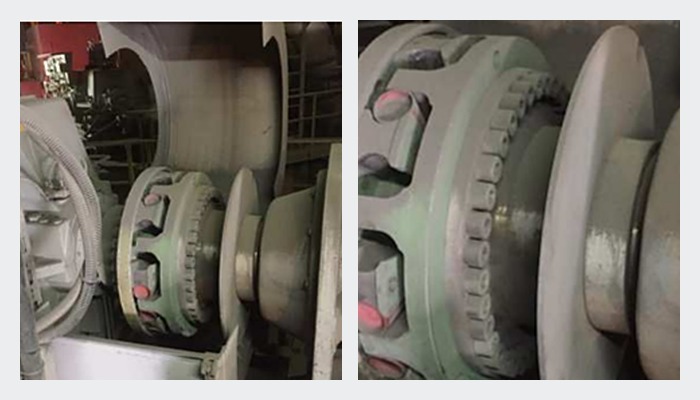
Intelligent engineering always considers the entire System
Selecting a coupling should never be based solely on torque requirements.
Instead, experienced engineers evaluate a wide range of operating and design parameters, including:
- Operating conditions
- Rotational speed
- Load fluctuations and cyclic loads
- Misalignment
- Vibration characteristics
- Maintenance requirements
- Lifecycle cost considerations
Furthermore, modern drive systems are becoming increasingly complex, making a holistic engineering approach more important than ever.
Ultimately, the performance of a drive system is determined not by the coupling alone, but by the interaction of all components working together.
Therefore, coupling selection should always be considered within the context of the complete drive system rather than as an isolated component decision.


Comment